
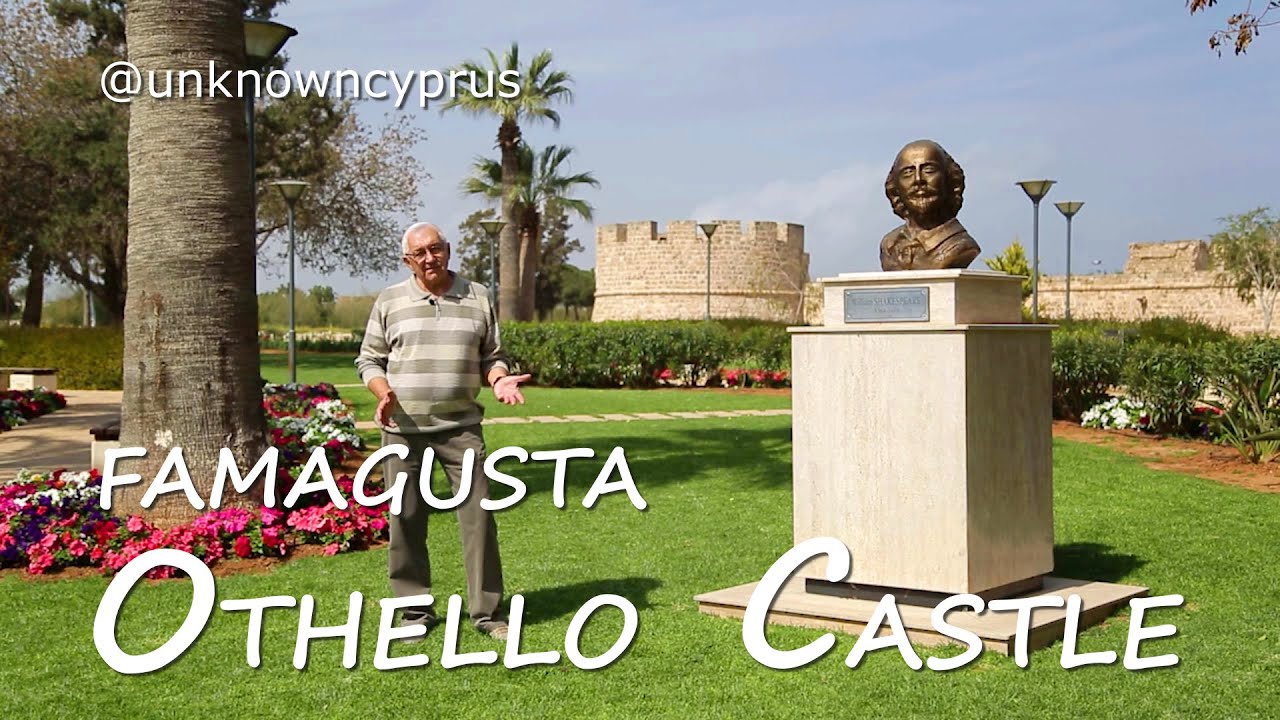
Shakespeare's Inspiration: The Walls of Othello's Castle in Famagusta
Where Literature Meets Stone
There are places where history happened. And there are places where history was imagined into existence. Othello's Castle in Famagusta (Gazimağusa) is both — a genuine medieval fortress with a direct literary connection to one of the greatest tragedies ever written.
Standing at the entrance to this imposing Venetian citadel, with the words "Othello's Tower" carved above the gate, you are stepping into a space where the hard facts of Mediterranean military history intersect with the timeless fiction of William Shakespeare.
The Historical Foundation
The castle was originally built by the Lusignans in the 14th century to guard the entrance to Famagusta's harbour — once one of the wealthiest ports in the entire Mediterranean. When the Venetians took control of Cyprus in 1489, they massively reinforced the fortress, adding the thick, rounded towers and the distinctive Lion of St. Mark relief that still adorns the entrance today.
The Venetian governor of Cyprus during the early 16th century was Christoforo Moro — a name that would echo through literary history. Moro served as the military commander of the island, and his tenure coincided with a period of intense political intrigue, jealousy, and betrayal within the Venetian colonial administration.
From Moro to Moor: The Shakespeare Connection
Shakespeare's Othello, the Moor of Venice (written around 1603) was based on an Italian novella by Cinthio (1565), which itself drew on real events in Venetian Cyprus. The parallels are striking: a Venetian military commander stationed on Cyprus, consumed by jealousy, manipulated by a trusted lieutenant, and ultimately destroyed by his own passions.
Whether Shakespeare specifically knew of Christoforo Moro is debated by scholars, but the connection between the name "Moro" and "Moor," combined with the Cypriot setting, has made Famagusta's castle forever synonymous with the tragedy. The Venetians themselves referred to this fortress as the "Tower of the Moro" — and so Othello's Tower it has remained.
Walking Through the Castle
The castle itself is a magnificent example of Venetian military architecture. Entering through the main gate, you pass beneath the carved Lion of St. Mark and into a central courtyard flanked by vaulted chambers that once served as armouries, stores, and garrison quarters.
The Great Hall
The largest chamber — the Great Hall — is a vast, atmospheric space with ribbed Gothic vaulting and narrow window slits that cast dramatic shafts of light across the stone floor. It is easy to imagine this as the setting for Othello's torment — the jealousy-fuelled confrontations with Desdemona, Iago's whispered manipulations in the shadows, the claustrophobic intensity of a fortress under siege.
The Ramparts
Climbing to the ramparts, you are rewarded with sweeping views of Famagusta harbour and the open Mediterranean beyond. The massive walls — up to five metres thick — were designed to withstand cannon fire, and they did exactly that during the famous Siege of Famagusta (1570–1571), one of the most brutal sieges in Mediterranean history, where the Venetian garrison held out for eleven months against the Ottoman army.
Famagusta: The Living Museum-City
Othello's Castle is just the beginning. The entire walled city of Famagusta is a living museum of Mediterranean civilisation:
- Lala Mustafa Paşa Mosque (formerly St. Nicholas Cathedral): A stunning 14th-century Gothic cathedral — modelled on Reims Cathedral in France — converted into a mosque after the Ottoman conquest. Its façade is one of the finest Gothic elevations outside France.
- The Venetian Palace: Ruins of the governor's residence, with elegant arched windows and a grand marble staircase.
- The Sea Gate (Porta del Mare): The original harbour entrance through the massive walls, offering dramatic views.
- The Citadel Moat: A dry moat system that encircles the fortress, now a peaceful walkway beneath ancient fig trees.
Practical Information
- Location: Famagusta (Gazimağusa), Eastern Northern Cyprus, approximately 60 km from Kyrenia.
- Duration: Allow 1–1.5 hours for the castle, plus 2–3 hours for the walled city.
- Combine With: Ancient Salamis (15 minutes away) and St. Barnabas Monastery for a full day of history.
- Best For: Literature lovers, history enthusiasts, architecture admirers, and photographers.
Step Into Shakespeare's World with Frostway LLC
Frostway LLC offers a specially designed Famagusta Heritage Tour that brings the city's extraordinary layers of history to life. Our expert guides take you through Othello's Tower, the Gothic cathedral, the Venetian Palace, and the atmospheric streets of the walled city — weaving together the threads of Lusignan, Venetian, Ottoman, and literary history into an unforgettable narrative.
For literature and history enthusiasts: our specially planned Famagusta tours await you. Book with Frostway LLC today. Contact us to reserve your place.